Mission
Vision
Our Vision is that people living in South Central New York are healthy by design and everyone is connected to quality, affordable healthcare provided by valued community partners that work together to deliver cost-effective care.
What is a BHCC?
Across NY State, Behavioral Health Care Collaboratives (BHCC) with a variety of names used, such as South-Central Behavioral Health Network (SCBHN), were formed through funding received from the New York State Office of Mental Health (OMH) and the Office of Addiction Services and Supports (OASAS). This effort was a result of the NYS Behavioral Health Value-Based Payment (BH VBP) Readiness Program. The BHCCs are intended to help prepare behavioral health providers to engage in Value-Based Payment arrangements, a financial incentive framework that rewards healthcare providers for improved quality, outcomes, and costs. The main goal is to improve the integration of physical and behavioral health. Please click here to learn more about VBP in NYS: Behavioral Health Provider Networks and Value-Based Payment Initiatives (ny.gov)
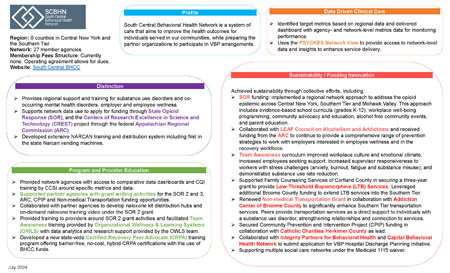
Click to Download the Fact Sheet
The South Central Behavioral Health Network (SCBHN)
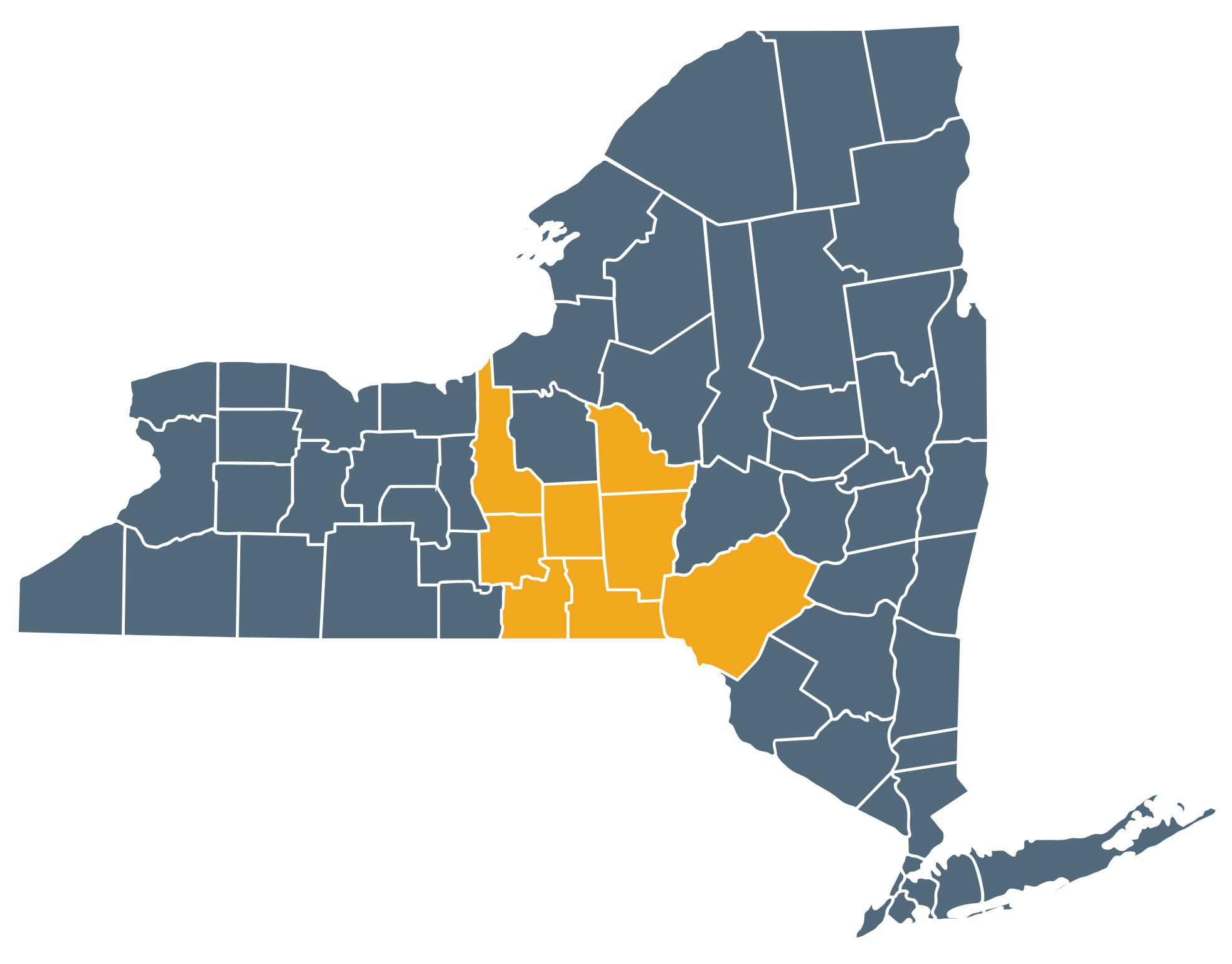
The South Central Behavioral Health Network, Inc. (SCBHN) began as the South Central Behavioral Health Care Collaborative (SCBHCC) and it is a network of 27 independent behavioral health, physical health, and social determinants of health (SDoH) organizations providing comprehensive community-based services throughout eight counties in Central New York and the Southern Tier. The members of our network have a shared goal of improving the health and wellness of individuals experiencing behavioral health disorders, often complicated by medical issues and/or social determinants of health needs.
The BHCCs and the BHNs in NY State used Behavioral Health Value Based Payment (BH VBP) funds to enhance quality care and improve outcomes. This included clinical and financial integration and the use of community-based recovery support services. In 2021, New York State allocated $20 million in American Rescue Plan Act enhanced Federal Medical Assistance Percentage (eFMAP) funding to BHNs. In 2025, we are collaborating with two other IPA/BHNs for another round of the eFMAP, VBP funding to cover the areas from Buffalo over to Albany.
The South Central Behavioral Health Network (SCBHN) includes 27 behavioral healthcare providers, primary care and other medical providers, as well as community-based organizations that deliver support services throughout the eight-county region shown on the map (Broome, Tioga, Tompkins, Cayuga, Madison, Cortland, Chenango and Delaware). The SCBHN functions on the strength of the partners collectively through referrals to develop and implement an infrastructure that strengthens integrative care and improves service and care outcomes. This drives efficiency and cost-effectiveness. Through sustainable, data-informed collaborations the SCBHN can support a comprehensive system of care that aims to improve the health outcomes for individuals served in our communities while preparing the partner organizations to participate in Value-Based Payment arrangements. We have achieved sustainability through our collective efforts.
What does this
mean to our
community members?
The SCBHN is an “open-door’ network of large and small providers that will ensure that you, as an individual living in our rural community, will have increased awareness and access to the affordable benefits of our comprehensive behavioral health system.
Through community partnerships and meaningful connections, SCBHN will:
1. Strengthen relationships and communication between primary care physicians, social support services for families, children, substance use, mental health, and hospitals.
2. Develop innovative approaches to ensure that our community has readily available access to their desired healthcare services.
3. Advocate and support local providers by sharing relevant information and best practices to improve the quality of services.